
Alternative payment methods can help international businesses reduce checkout friction, reach more customers, and increase successful transactions across different markets. While Visa and Mastercard remain important for global commerce, customers increasingly expect to pay through local wallets, bank transfers, digital payment solutions, and other methods they already trust.
For businesses selling across multiple countries, offering the right payment mix is no longer simply a checkout feature. It can directly affect conversion rates, payment acceptance, customer experience, and international sales growth.
This becomes even more important for high-risk merchants, including gaming, forex, adult, travel, subscription, nutraceutical, and digital-service businesses, where payment acceptance can already be more complicated.
Why Alternative Payment Methods Matter for International Sales
Customers do not all prefer the same payment method. A card that works well in one market may not be the preferred option somewhere else.
Local payment methods can make checkout feel more familiar and reduce the hesitation that sometimes causes customers to abandon a purchase. Depending on the target market, businesses may consider:
Digital wallets
Local bank transfers
Account-to-account payments
Buy now, pay later solutions
Mobile payment methods
Local debit networks
Real-time payment systems
Open banking payments
Cryptocurrency, where legally permitted and commercially appropriate
For merchants expanding internationally, this creates an opportunity to build a multi-method payment strategy rather than relying on one payment channel.
The Connection Between Payment Choice and Conversion Rates
A customer can be ready to buy and still abandon checkout if their preferred payment method is unavailable.
Consider an online subscription company selling into several European markets. Its card acceptance may be technically available, but some customers may prefer a local bank-based payment option. Adding that option can remove an unnecessary barrier during checkout.
The same principle applies to gaming, travel, digital services, and ecommerce businesses. Payment preferences vary by market, customer demographic, transaction size, and purchasing habits.
This is why international payment processing should be designed around customer behavior rather than simply adding as many payment methods as possible.
High-Risk Merchants Face a Different Payment Challenge
For high-risk businesses, adding alternative payment methods is only part of the problem.
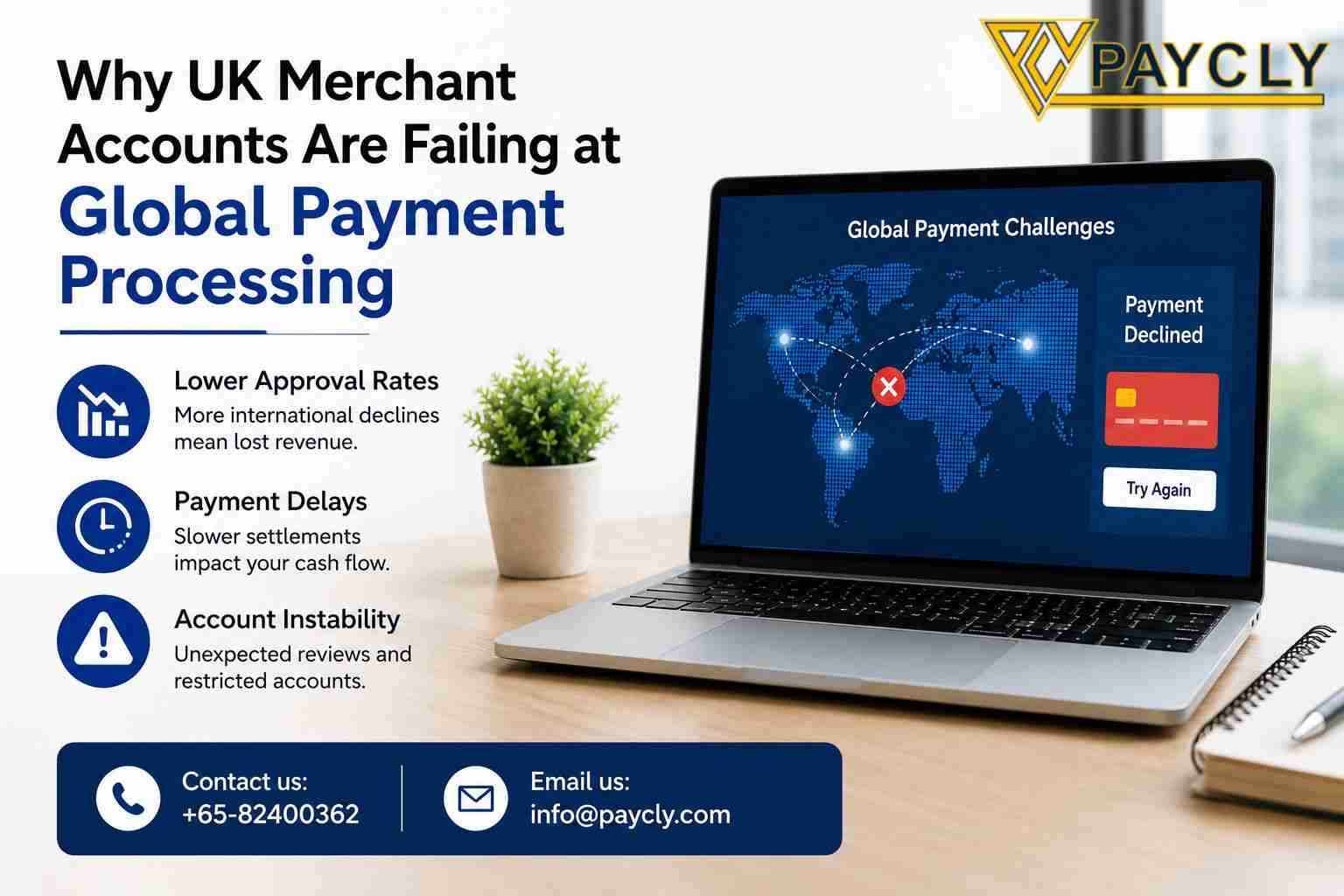
A gaming merchant may have strong customer demand but experience declined transactions because its existing payment setup does not adequately support its markets. A forex business may encounter additional underwriting requirements before obtaining card-processing services. An adult-content merchant can face restrictions from traditional financial institutions and payment providers.
Travel businesses can also experience cash-flow pressure when transactions are held for additional reviews, while subscription companies may struggle with recurring-payment declines and chargebacks.
These problems have a direct commercial impact.
A merchant processing significant monthly volume may suddenly find that a reserve requirement has increased. Another business may discover that its payment provider has introduced transaction limits just as sales are growing. In practice, these situations can create a difficult choice: slow down growth or search for additional processing capacity.
That is why high-risk merchant account providers often evaluate the business model, customer geography, expected processing volume, chargeback exposure, and compliance requirements before establishing a payment solution.
What High-Risk Merchants Should Look for in a Payment Provider
For high-risk businesses, payment flexibility needs to be combined with reliable acquiring and risk management.
Before choosing a provider, merchants should examine:
International coverage: Can the provider support the countries and currencies relevant to the business?
Payment gateway integration: Can alternative payment methods and card processing be managed through a practical gateway setup?
Multi-currency processing: Can customers pay in appropriate local currencies while the merchant manages settlement efficiently?
Fraud prevention: Does the payment infrastructure support tools such as 3D Secure, transaction monitoring, and risk screening?
Chargeback management: What processes are available when disputes increase?
Settlement terms: Are reserves, settlement schedules, transaction limits, and payout conditions clearly explained before onboarding?
These details can matter just as much as the headline processing rate.
Building a Global Payment Strategy That Can Scale
Adding alternative payment methods should be part of a broader global payment processing strategy.
Merchants should first identify their highest-value markets and understand how customers prefer to pay in those regions. From there, they can combine card acceptance with relevant local payment methods.
A business may also benefit from multiple acquiring relationships or processing routes where appropriate. This can provide additional resilience if one payment channel experiences declining approval rates, capacity limitations, or temporary disruptions.
For high-risk merchants, diversification can be particularly important because payment continuity is closely connected to cash flow.
Choosing the Right Alternative Payment Solution
The strongest payment strategy is not necessarily the one with the longest list of payment methods. It is the one that matches the merchant's customers, markets, risk profile, and growth plans.
Businesses considering alternative payment methods, international payment processing, or high-risk merchant accounts should compare providers based on acceptance capabilities, geographic coverage, currencies, integration options, fraud controls, chargeback support, reserves, and settlement terms.
For merchants entering new markets, a payment provider experienced in cross-border and high-risk processing can also help identify practical payment routes before expansion begins.
Final Takeaway
International sales depend on more than attracting customers. Businesses also need to make it easy for those customers to complete transactions.
Alternative payment methods can reduce checkout friction, support local payment preferences, and give international merchants more ways to convert customers. For high-risk businesses, the right combination of payment methods, acquiring relationships, fraud controls, and merchant-account infrastructure can also help address some of the payment challenges that come with operating in higher-risk sectors.
As international commerce continues to become more localized, merchants that understand alternative payments, multi-currency processing, local payment methods, and global payment gateways will be better positioned to build a checkout experience suited to customers across multiple markets. Talk to the fintech expert today






Write a comment ...